
A patient is at the front desk, ready to pay. Their treatment is complete, but the receptionist does not know what follow-up appointment has been agreed. They walk to the treatment room. The practitioner interrupts their preparations for the next patient. A little later, the admin team checks whether a payment request sent earlier has been paid.
Everyone is trying to do their job carefully. Yet completing a single visit takes time from several people.
These moments barely register in a busy clinic. Over time, they become part of the routine. That is precisely why it is worth looking at which questions keep coming up, and why.
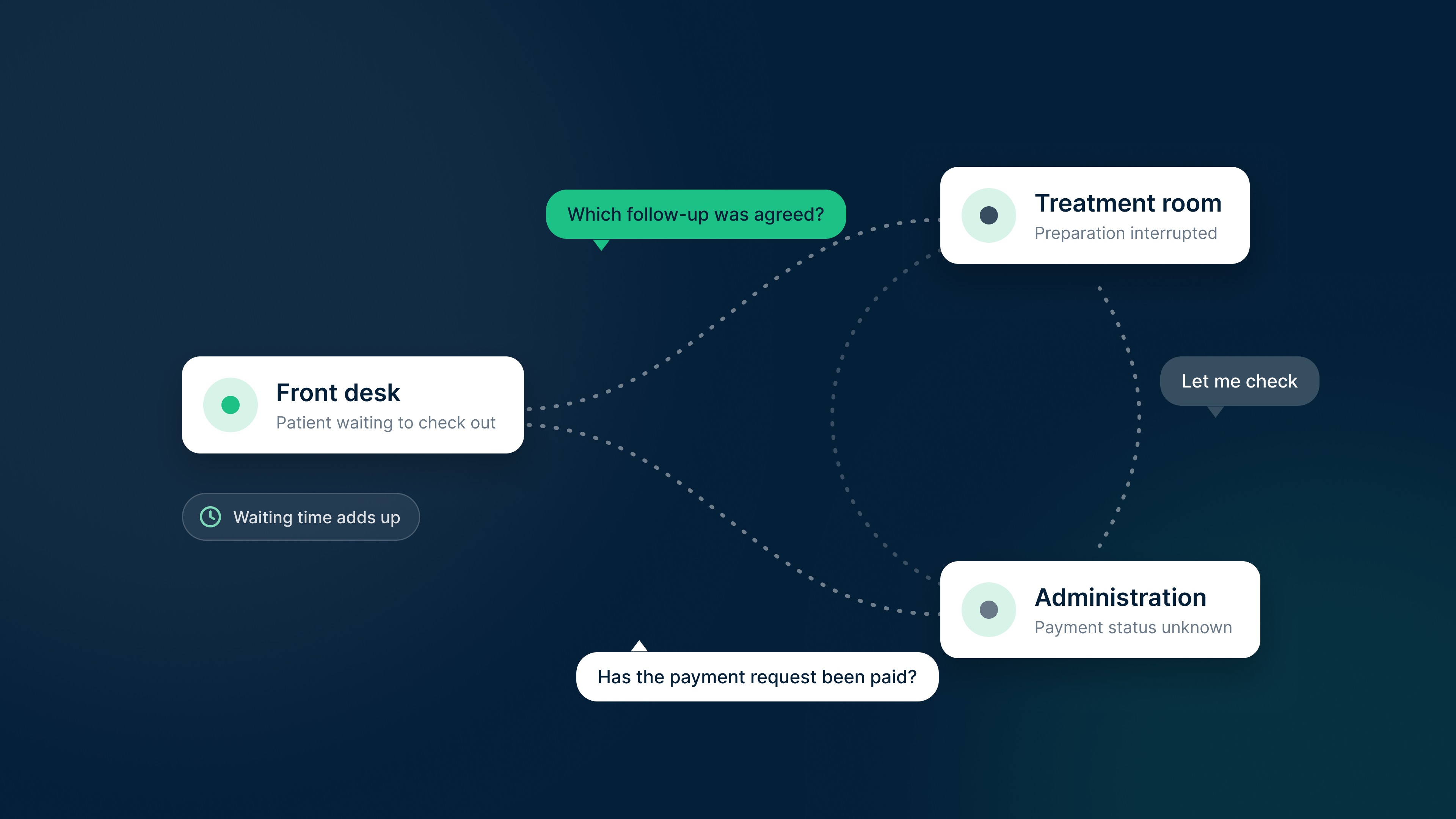
A quick question costs more than a quick answer
A colleague has to stop, think back to the previous patient, or reopen a record. Meanwhile, someone else is waiting for clarification. For the patient, it can feel as though the team is not entirely sure what was agreed, even though the information is available somewhere.
An experienced receptionist or practice manager often fills this gap. They know who agreed what, where the information is, and what needs to happen. But as the number of staff and locations grows, that reliance becomes increasingly fragile.
Discussions about clinical uncertainty, unexpected symptoms, or patient safety will naturally remain essential. The opportunity lies in recurring administrative questions where the answer is already known, but is not readily available to the next colleague.
Three handovers that deserve attention
1. From arrival to treatment
The patient has checked in at the front desk. How does the practitioner see that? And who updates the status when the patient is called in?
Agree on who records the arrival and where the practitioner checks that information. Also decide who updates the status when the situation changes. This prevents a digital record and a verbal message from existing side by side without anyone knowing which takes precedence.
It may seem like a small agreement. But when colleagues can trust the information, they do not need to keep checking whether the patient has arrived.
2. From treatment to payment
After treatment, the front desk needs to be able to move things forward: process the payment and, if agreed, schedule a follow-up appointment.
Before that handover, record what the front desk needs to know. Which treatment has been recorded? What needs to be paid? What has been agreed about follow-up? Make sure the receptionist can find this information in a consistent, accessible place.
Also distinguish between the steps in the payment process. A payment request sent is not yet a payment received. Who checks the payment status? Who follows up on an outstanding request? And how can the next colleague see that this has already been done?
The patient then does not have to relay arrangements between the treatment room and the front desk. And the practitioner does not have to reconstruct the previous visit while the next patient is already waiting.
3. From an outstanding item to a completed action
Some things remain outstanding after the visit. For example, a callback may still need to be scheduled, or administrative information may need to be added.
Decide straight away who will take responsibility for the action and when. Make sure the colleagues involved can see its progress. When shifts change or someone is absent, it should also be clear who takes over.
Sending a message does not, in itself, complete a handover. The next staff member needs to know what needs to happen, whether it has already happened, and what, if anything, is still missing.
Start with one week of listening
You do not need to change the entire workflow straight away. Ask the team to briefly track recurring administrative questions over five working days. A tally by question type is enough; no patient details are needed.
Then discuss three things:
- Which question came up most often?
- Was the information not recorded, hard to find, or out of date?
- Was it clear who needed to take the next step?
Next, choose one recurring problem and agree on one specific way of working to address it. For example: the practitioner records the follow-up instructions before the patient goes to the front desk. The following week, check whether the same question comes up less often and whether colleagues can move forward independently.
Give working agreements a consistent place
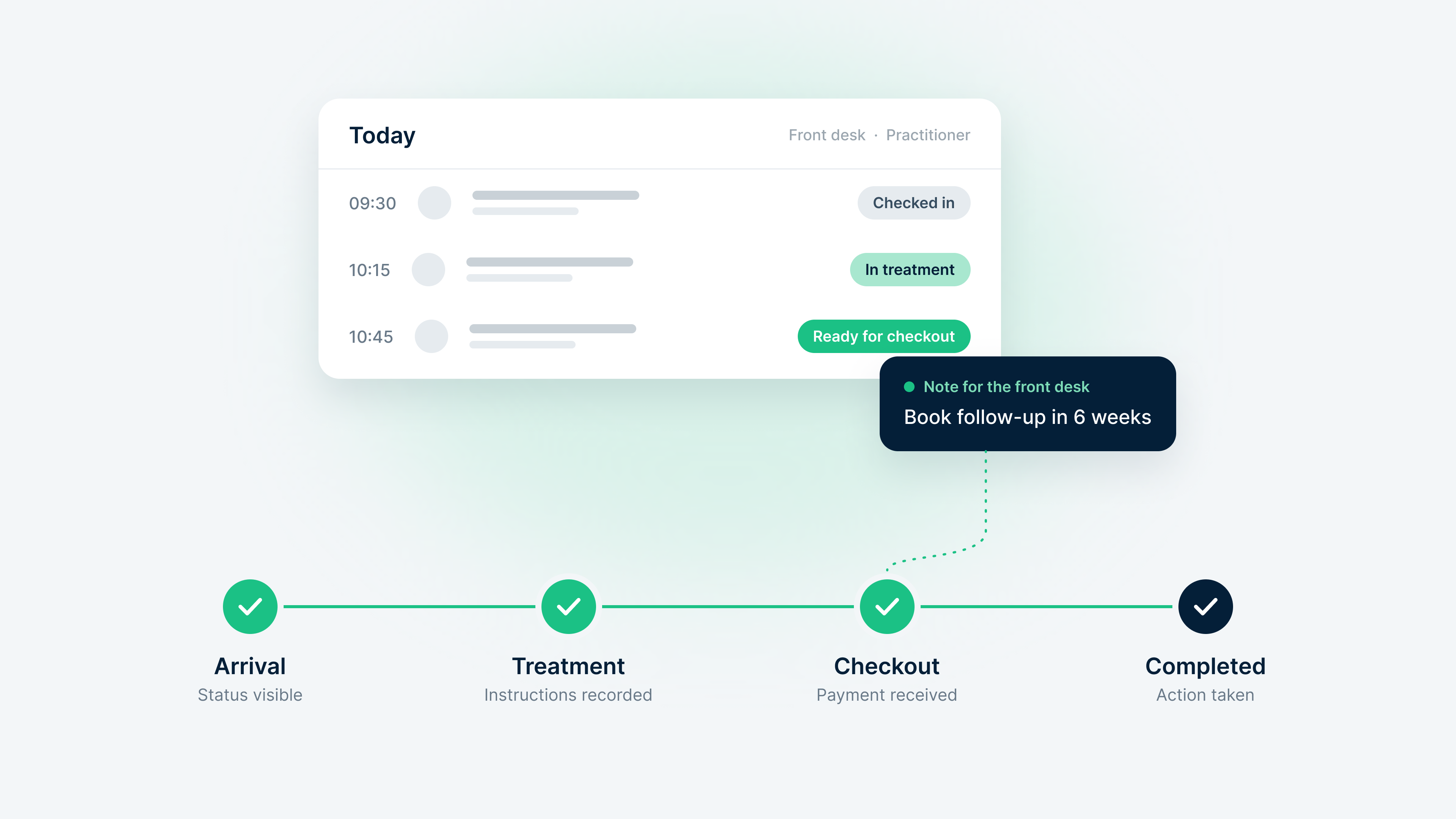
In Clinicminds, the dashboard views for receptionists and practitioners support this day-to-day collaboration. They help the team keep track of the progress of patient visits. The practitioner can also leave a note with instructions for the front desk at checkout.
The value comes from using them together: information in the right place, available to the person who needs to act on it. Software supports this, but clear working agreements make it reliable.
Tomorrow, take a moment to listen to the questions being asked around your clinic. The one that comes up most often is a good starting point for a working day with fewer interruptions and more attention for the patient.